


18 December 2025
INHUIS WINTER 2025/2026
Update from Royal Huisman and Huisfit
Various quotes from article published by Onboard Magazine (issue Winter 2026). Words: Gemma Harris
Shipyards and refit facilities have always been defined by the fundamentals of maintaining, repairing and upgrading. But today, some of these traditional boundaries have blurred.
The modern yard has become a hub of innovation and problem-solving, prioritising the next generation while tasked with handling one of the most complex eras the superyacht industry has experienced. Client expectations are rising, new technologies and rapid digitalisation are at the fore, and the marketplace is increasingly sustainability-driven thanks to regulatory and societal pressures.
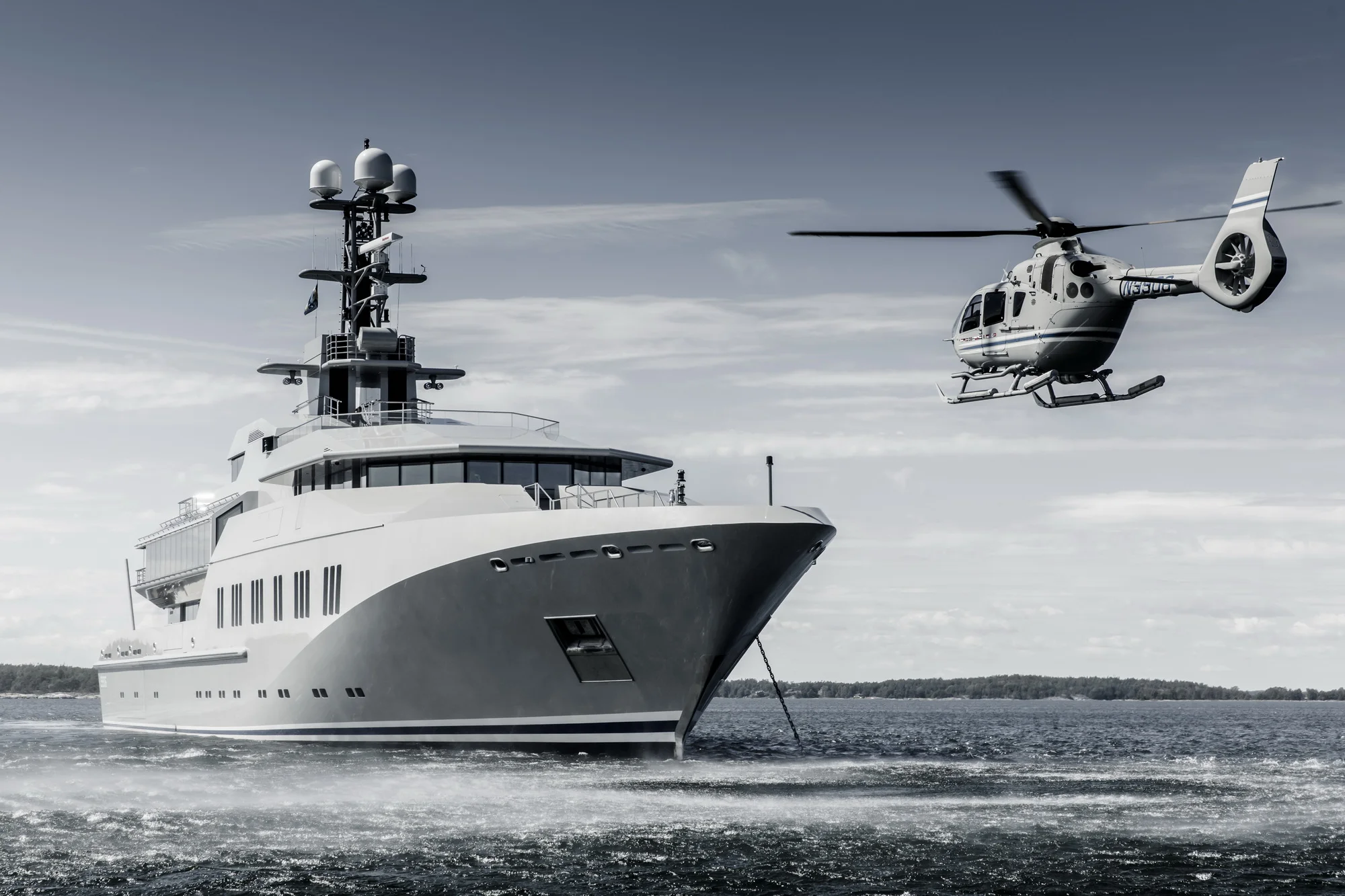
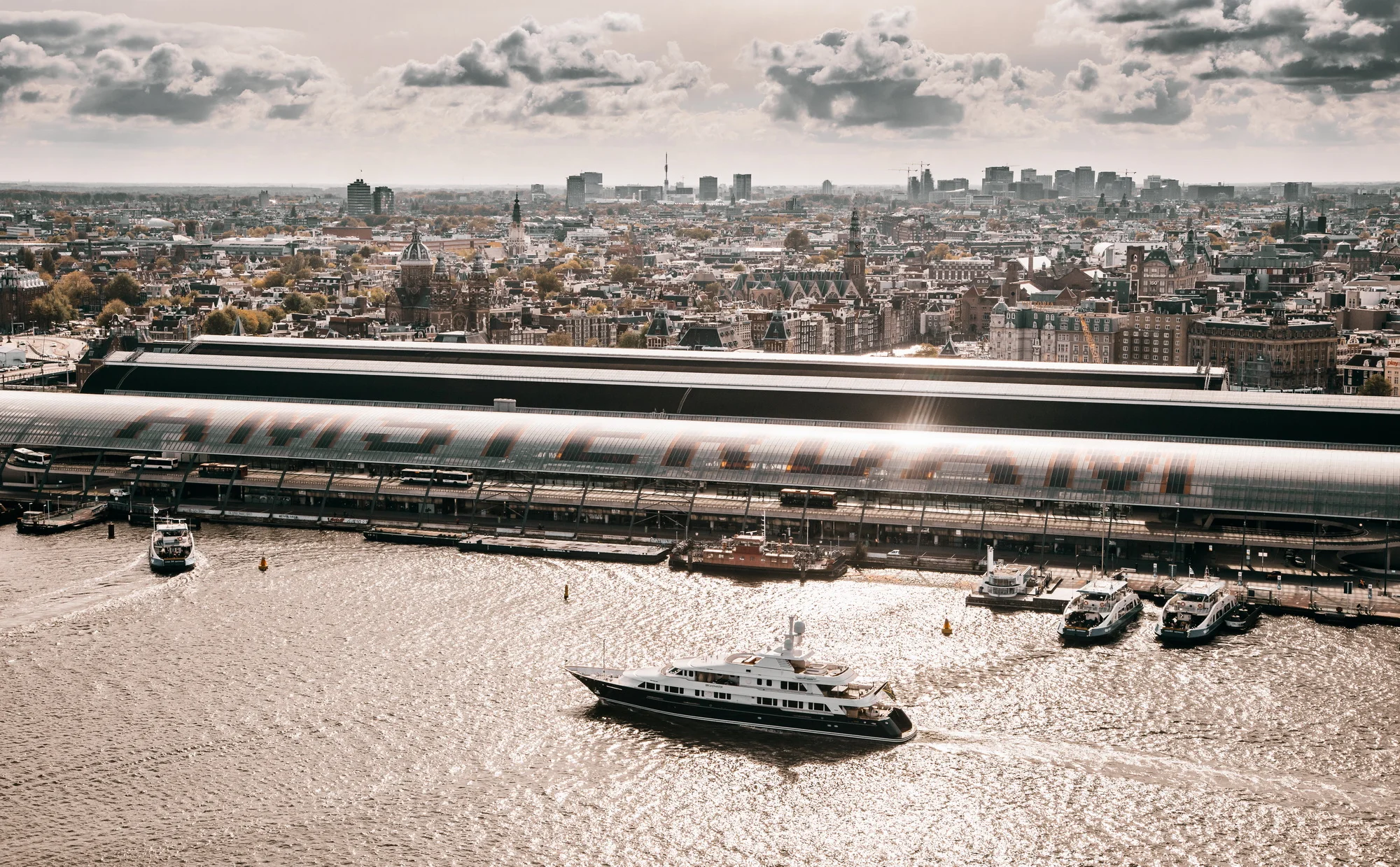
The Lürssen motor yacht Skat benefitted from HUISFIT four times.
As yachts grow larger, more power-dense and more tech-integrated, refit facilities are under scrutiny to deliver smarter, faster and cleaner. So, how are shipyards keeping pace? What does it take to refit for tomorrow while honouring the skills and traditions that built the industry? And as innovation, regulation and expectations evolve, what will define the next generation of refits?
ONBOARD explores how the global network of shipyards and refit facilities is adapting to the changing landscape and reshaping what it means to stay competitive today.
TECH-FORWARD, HUMAN-CENTRED
It isn’t a surprise that across the leading refit and new-build hubs, technology is quickly shaking up how things are done, how they operate and how they work to streamline processes, improve quality and give teams the tools to manage increasingly complex projects.
For many, this new technology-forward era begins with data serving as the backbone of yard operations, including digital twins, advanced modelling, and real-time project management software. “At HUISFIT we combine traditional craftsmanship with hard data,” says Stefan Coronel, General Manager at HUISFIT by Royal Huisman.
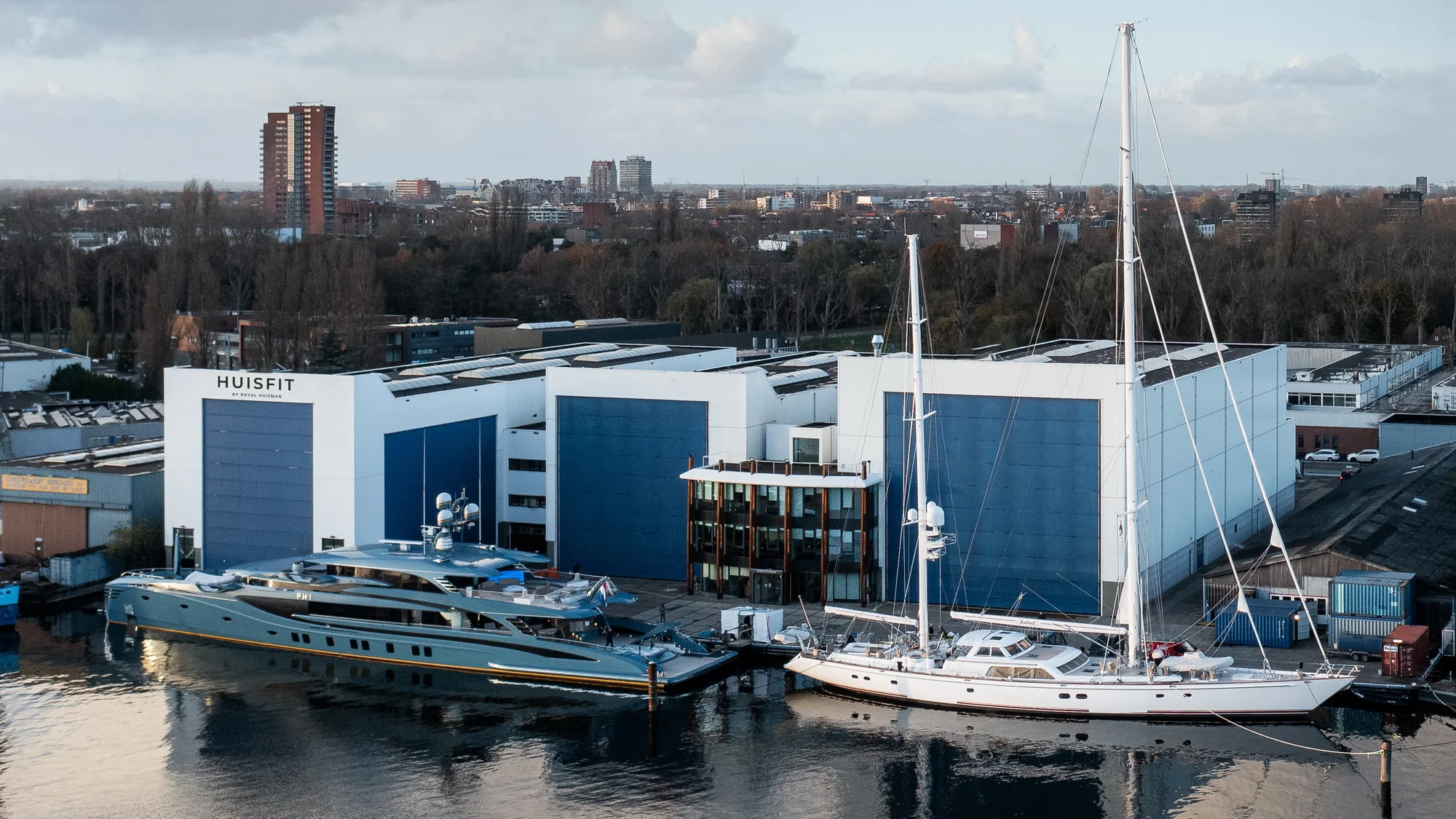
The HUISFIT facility in Amsterdam
Coronel adds: “Our engineers work with advanced 2D/3D modelling and precise weight estimates, so we can predict outcomes, de-risk change, and keep schedules realistic. We support this with open-book project administration, fortnightly progress updates and financial reports, giving owners and captains transparent, data-rich decision points throughout the refit.” […]
Both automation and tools such as 3D scanning, CNC machining, and rapid prototyping have helped yards wanting to reduce bottlenecks and compress project timelines. Yet even as the technological tools improve speed, the yards remain insistent that the human element remains vital.
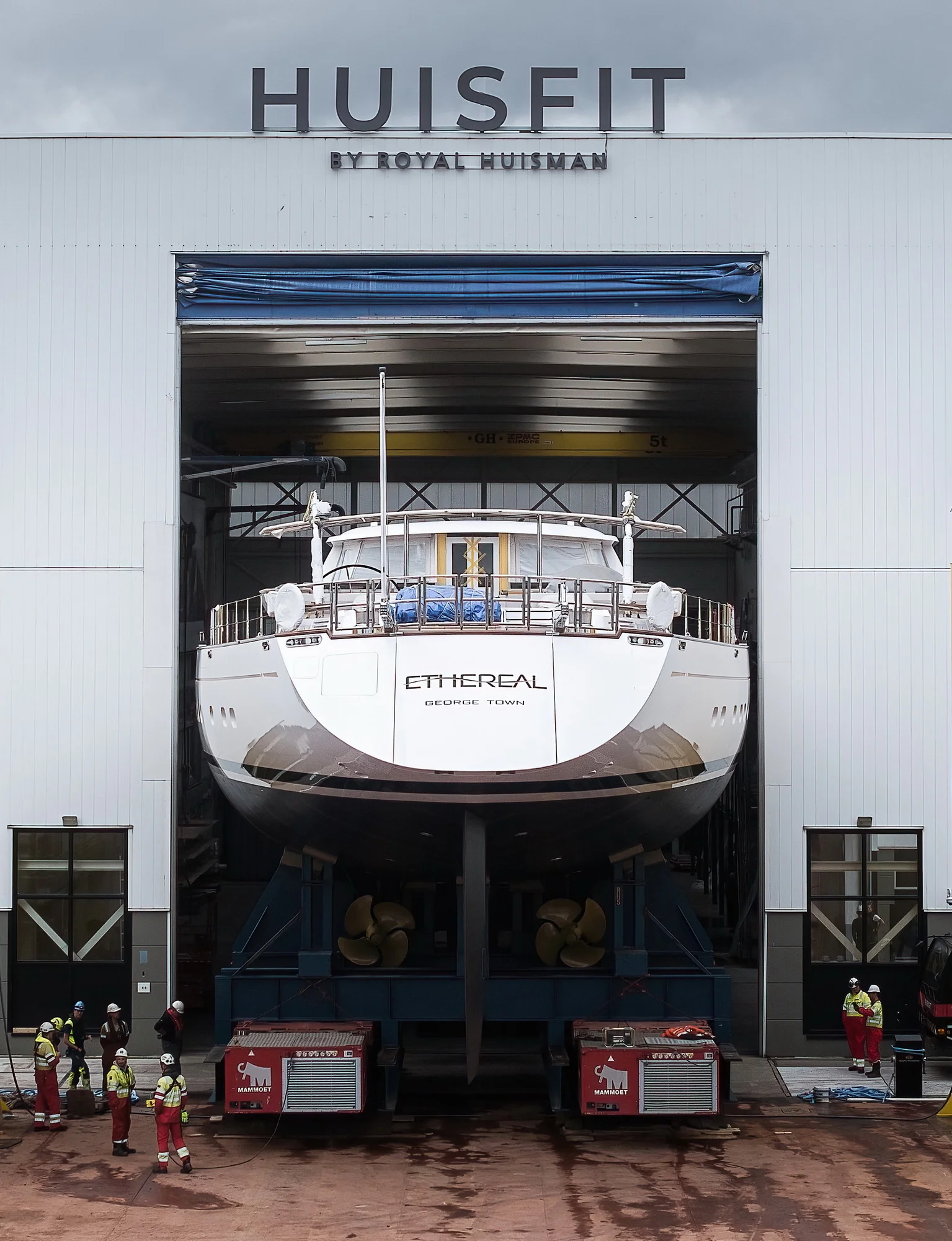
The world's first hybrid superyacht, Ethereal, following her major refit in Amsterdam.
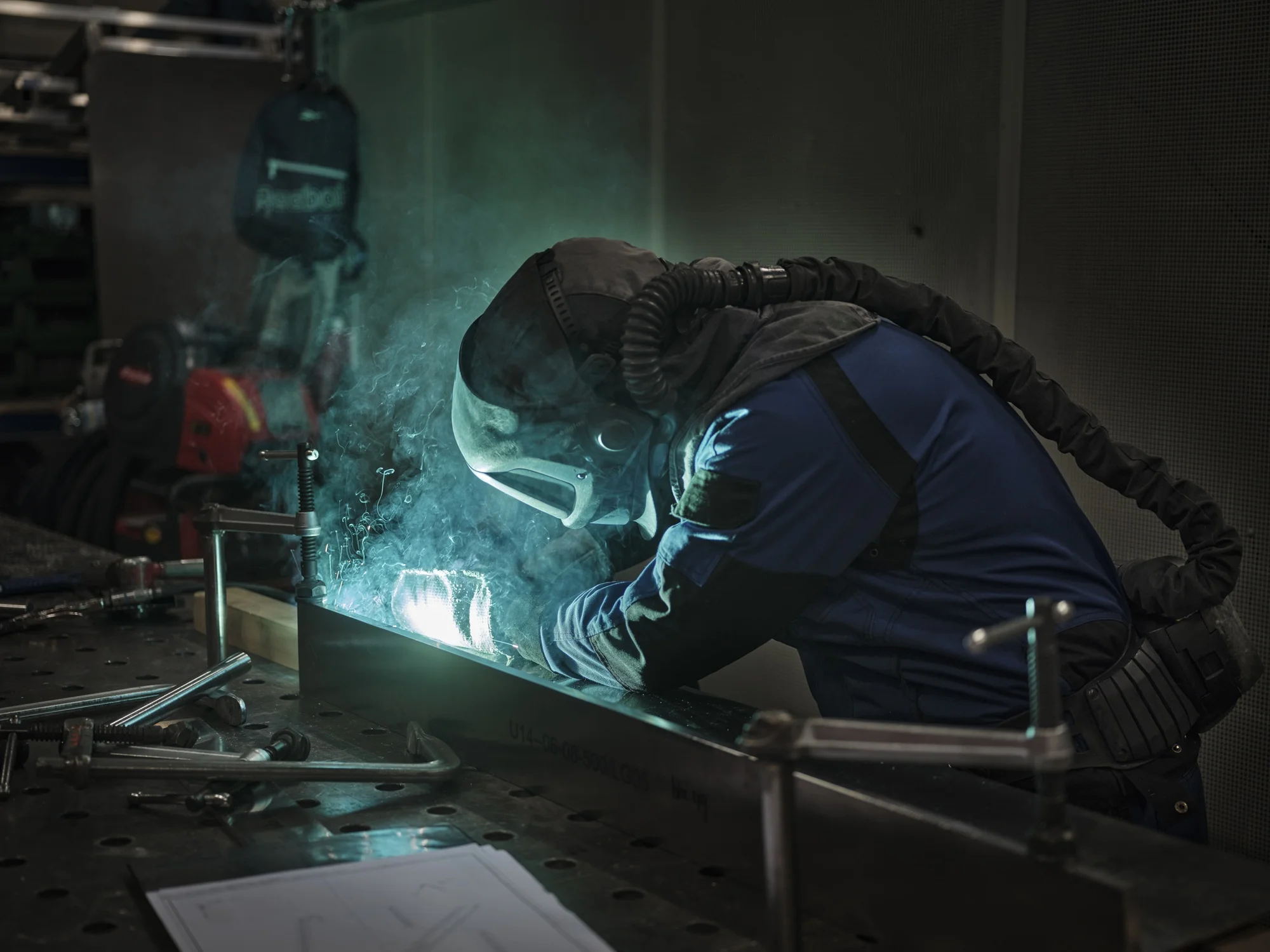
“Our approach is ‘expertise à la carte’: stateof- the-art tools in the hands of experienced specialists,” comments Coronel. Low agrees: “Technology will always play a part and have pushed our abilities, but ultimately it is still the tradespeople themselves, their skill, knowledge, finesse, and motivation to achieve the highest standards that will continue to define a yard.” […]
WORKFLOW AND WORKFORCE CHALLENGES
As technology accelerates and client expectations rise, shipyards are facing various mounting pressures that innovation alone cannot fix. While tools such as 3D scanning, digital twins, and real-time project platforms are improving accuracy, they can’t fully offset the sector’s most persistent constraints of planning gaps, labour scarcity, long lead times, and supply chain friction. […]
Supply chain delays continue to impact delivery timelines, particularly for specialised components with long lead times. Coronel sees lead times as one of the sector’s most persistent challenges. “Lead times for specialised components and securing the right slot can be bottlenecks across the sector. We mitigate this with realistic scheduling and project management.” […] HUISFIT is taking a proactive approach, expanding its in-house expertise by drawing on the broader Royal Huisman, Rondal, and P&G Yachting ecosystem and investing in its team.
Balancing speed with quality has become a defining tension of modern refit projects. Shorter turnaround times, tighter regulation and higher technical standards all require additional time and oversight, placing even more strain on already stretched resources.
DRIVING AGENDAS FORWARD
Few topics receive as much attention and are scrutinised in the sector as sustainability, and one of the industry’s main sticking points within this is propulsion. The shift toward hybrid propulsion, alternative fuels and more environmentally responsible operations is unmistakable. Interest is growing, though progress and adoption are uneven.
HUISFIT has shown promise in this space, having developed its ‘defined, ultimate hybrid upgrade package’ with headline conversions on Foftein and Juliet. However, retrofits are rarely plug-and-play, as Coronel explains: “Space, weight, integration and regulatory compliance are factors to take into account in existing vessels. These limitations require a creative approach, but often management and many older technical components can be replaced by more modern and smaller units.” […]
Feadship Broadwater was converted at HUISFIT
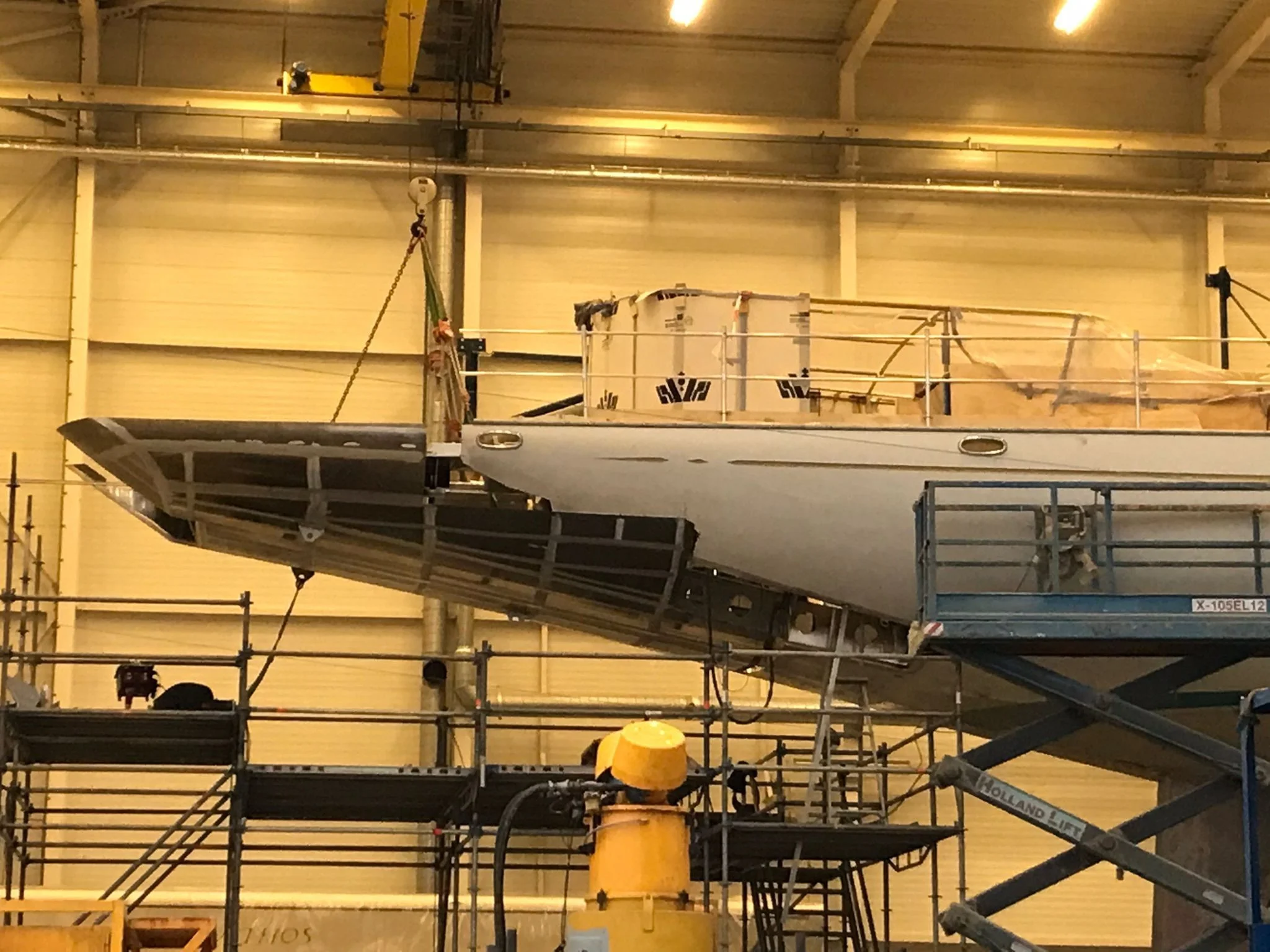
Athos during her lengthening and conversion at HUISFIT in Amsterdam
“Today’s requests tend to cluster around three areas: firstly, green solutions, secondly, comfort and aesthetics and last but not least, functionality. Our conversion projects, such as Broadwater and Athos, and the full rebuild of Atlantide, show how deep transformations can go.”
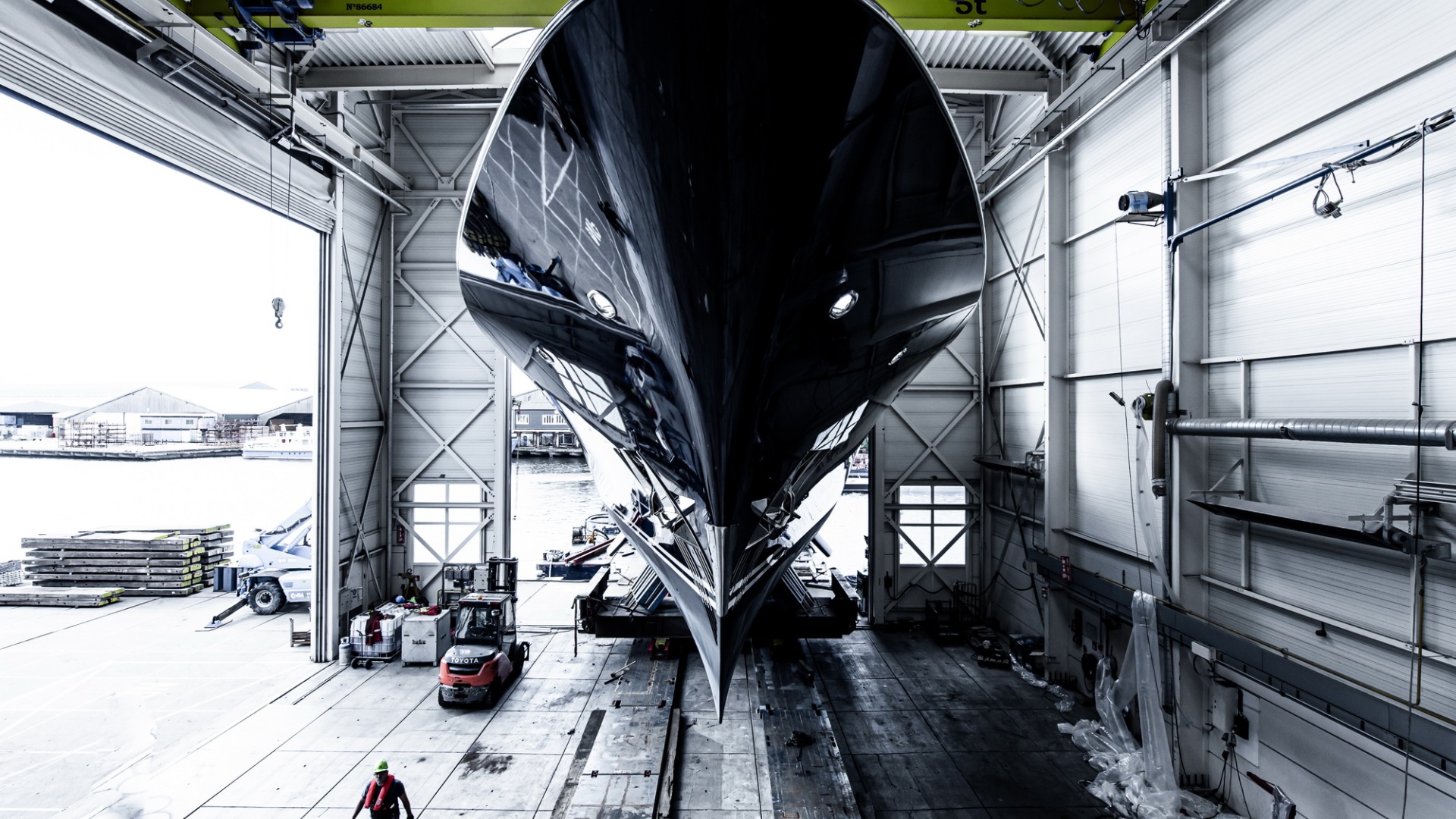
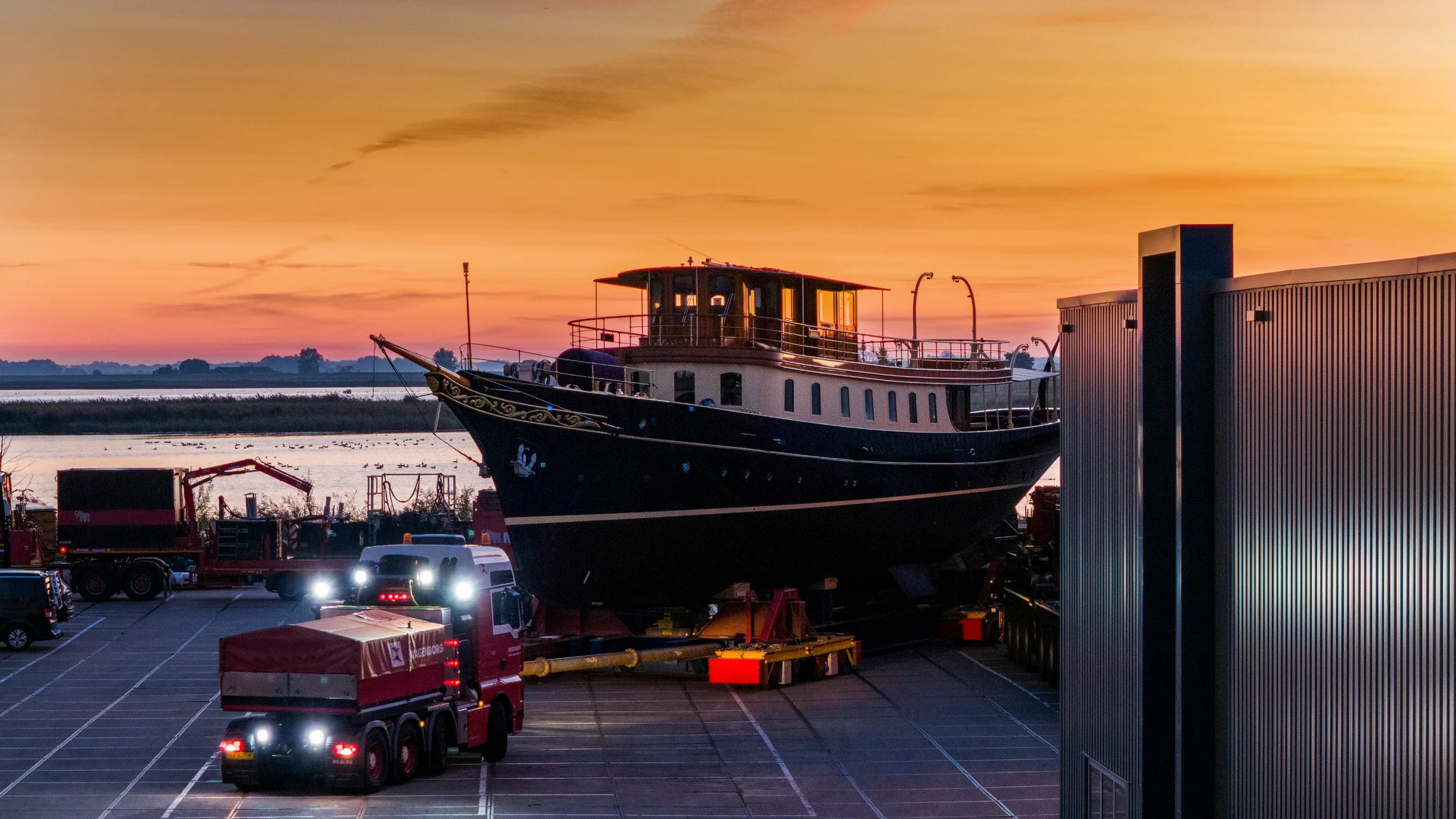
Ready for launch: 1930-motorsailer Atlantide following her full rebuild at HUISFIT
HUISFIT is tracking its sustainability progress through initiatives such as Project Tidal Shift, benchmarking projects against ESG criteria. The yard has invested in efficient processes and compliant facilities, such as temperature - and humidity-controlled EU-compliant paint environments, while also modernising equipment and methods to reduce rework and energy use. […]
FUTURE-PROOFING THE FLEET
Retrofitting has become one of the most dynamic segments of the refit world, driven by owners who see the value in revitalising the life of existing yachts – adding new technology or features that weren’t included originally – rather than replacing them. Coronel highlights: “Today’s requests tend to cluster around three areas: firstly, green solutions, secondly, comfort and aesthetics and last but not least, functionality. Our conversion projects, such as Broadwater and Athos, and the full rebuild of Atlantide, show how deep transformations can go.”
you might like this too

